
The Certification Revolution: Why 2026 Is the Turning Point for Professional Healing Practitioners

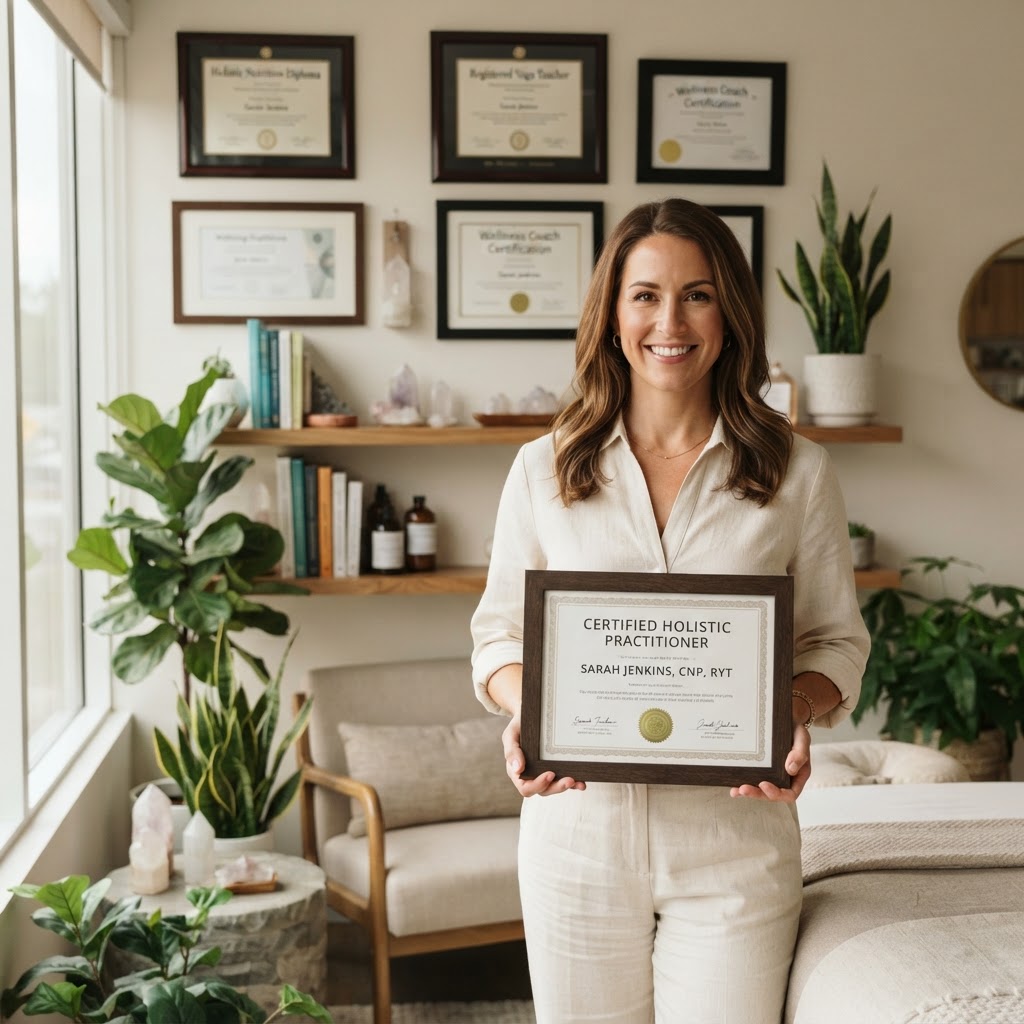
In 2026, the healing arts are undergoing a professionalization revolution. What was once an unregulated landscape of informal practitioners is rapidly becoming a structured, credentialed industry with clear standards, board certifications, and institutional recognition. For healing practitioners, this shift represents the single most important career decision of the decade: get certified, or get left behind.
The numbers tell the story. The wellness coaching market alone is projected to reach $21.57 billion in 2026. Integrative medicine programs are earning recognition from major medical boards. New certification designations are launching across functional medicine, sound healing, energy healing, and lifestyle medicine. And the income gap between certified and uncertified practitioners has never been wider.
Here is what every healing practitioner needs to know about the certification landscape in 2026.
Why Certification Matters More Than Ever
Three forces are driving the professionalization of healing arts in 2026:
1. Institutional Demand
Hospitals, VA facilities, wellness retreats, and corporate wellness programs are actively hiring healing practitioners — but they require credentials. A 2026 Forbes article noted that clients and institutions are no longer moved by surface-level marketing; they want formal certification from practitioners who understand the scientific foundations of their modalities.
The American Board of Physician Specialties (ABPS) now offers board certification in integrative medicine with a 2026 examination schedule. George Washington University's integrative medicine programs have earned recognition from the American College of Lifestyle Medicine, allowing graduates to sit for certification exams with reduced prerequisites. These are not fringe credentials — they are mainstream medical board recognitions.
2. Consumer Sophistication
Today's wellness consumers are educated and discerning. They research practitioners before booking. They look for certification on your website, your LinkedIn, your Instagram bio. A 2026 industry analysis found that certified practitioners convert website visitors to clients at 3–5 times the rate of uncertified practitioners.
The reason is trust. Certification signals that you have invested in your training, understand safety protocols, and are accountable to a professional standard. In an era where anyone can buy a singing bowl and call themselves a healer, certification is the line that separates professionals from hobbyists.
3. The Income Gap
The financial data is stark:
**Uncertified practitioners:** $25–$50 per session, inconsistent bookings, reliance on word-of-mouth.
**Certified practitioners:** $70–$150 per session for standard modalities, $150–$300 for specialized work.
**Board-certified integrative medicine practitioners:** $200–$500 per consultation, with hospital employment at $75,000–$120,000+ annually.
**Certified sound healing practitioners:** $200–$3,000 per group event, $70–$250 per individual session.
**Certified energy healing practitioners:** $70–$120 per session at hospitals and wellness centers, with VA and cancer center contracts.
The income gap is not 10 or 20 percent. It is 3–5x, and for board-certified practitioners, it can be 10x or more. Certification is not an expense — it is the highest-ROI investment a healing practitioner can make.
The New Certification Landscape in 2026
Functional Medicine Certified Professional (FMCP)
The Institute for Functional Medicine (IFM) debuted its new certification program in 2026, offering two designations: the Functional Medicine Certified Professional (FMCP) for licensed health practitioners and a parallel credential for allied health professionals. This is the first standardized, competency-based certification in functional medicine, assessing practitioners across various scopes of licensure.
The FMCP credential certifies that practitioners can apply functional medicine principles safely and effectively, addressing root causes rather than symptoms. For holistic practitioners, this represents a pathway into the rapidly growing functional medicine market.
Integrative Medicine Board Certification (ABPS)
The ABPS offers board certification in integrative medicine with requirements including completion of residency training and an ABOIM-approved fellowship, or graduation from an accredited naturopathic college. The 2026 examination schedule is now open. This is the gold standard for medical professionals seeking to integrate traditional and modern healing approaches.
Lifestyle Medicine Certification (ACLM/IBLM)
The American College of Lifestyle Medicine and the International Board of Lifestyle Medicine offer certification for physicians (MD, DO), nurses, and allied health professionals. GW's integrative medicine programs now qualify graduates for the ACLM certification exam with just 30 hours of additional study. Certification requires holding a master's or doctorate degree in a health discipline.
Healing Touch Certification (CHTP)
The Healing Touch Program offers a structured certification pathway: five courses of study, supervised practice, and a certification examination. Certified Healing Touch Practitioners (CHTPs) meet established standards in training, safety, ethics, and clinical presence. This program is taught in alignment with healthcare standards, supporting safe integration alongside conventional medical care.
Sound Healing Certification
Professional sound healing certification programs now offer Level 1 (foundational) and Level 2 (practitioner diploma) pathways. Curricula cover the physics of sound, instrument mastery, clinical applications, nervous system regulation, safety protocols, and business development. The Sound Healing Academy and similar institutions are setting the standard for this rapidly growing modality.
How to Choose the Right Certification
With so many options, choosing the right certification can feel overwhelming. Here is a practical framework:
Match Your Modality
Energy healers → Healing Touch Certification (CHTP) or IHA energy healing certification
Sound healers → Professional sound healing certification (Level 1 + Level 2)
Holistic health coaches → Integrative Health & Lifestyle Certificate or IHA coaching certification
Functional medicine practitioners → FMCP certification through IFM
Physicians → ABPS Integrative Medicine Board Certification or ACLM Lifestyle Medicine Certification
Verify Credibility
Before enrolling in any certification program, verify:
Is the certifying body recognized by major medical or wellness institutions?
Does the curriculum include clinical safety protocols?
Is there a supervised practice or examination component?
Do graduates report measurable income increases?
Is the certification maintainable through continuing education?
Consider the ROI
Holistic health coaching certification programs in 2026 range from $2,000–$9,500 in tuition. Sound healing certifications range from $500–$3,000. While this represents a significant upfront investment, certified practitioners typically recover the cost within 3–6 months through higher session rates and increased bookings.
The IHA Advantage
The International Healing Association (IHA) provides a unified certification framework that recognizes practitioners across multiple healing modalities. Rather than pursuing separate certifications for each modality, IHA members can build a credential portfolio that demonstrates breadth and depth across the healing arts.
IHA certification benefits include:
International recognition across energy healing, sound healing, acupuncture, and integrative medicine
Access to continuing education and professional development resources
Listing in the IHA practitioner directory, connecting you with clients and institutions
Professional standards and ethics framework that clients and employers trust
Community of certified practitioners for referral networks and collaboration
The Bottom Line
The healing arts are professionalizing. The question is no longer whether certification will become the industry standard — it already is. The question is whether you will be on the certified side of the divide or the uncertified side.
Certified practitioners are building careers with stable income, institutional respect, and professional growth. Uncertified practitioners are increasingly finding themselves locked out of the best opportunities — hospital positions, corporate contracts, retreat partnerships, and the trust of an increasingly sophisticated client base.
If you have healing skills but no professional certification, you are working at a fraction of your earning potential. The investment in certification is not just about a credential — it is about claiming your place in the future of healthcare.
**Ready to begin your certification journey? Join IHA as a free member today and take the first step toward a recognized, professional healing career.**
👉 [Start your free IHA membership at healingof.org/free-member](https://www.healingof.org/free-member)
Comments