
Sound Healing 2026: A Complete Practitioner's Guide to the Science, Modalities, and Professional Opportunities

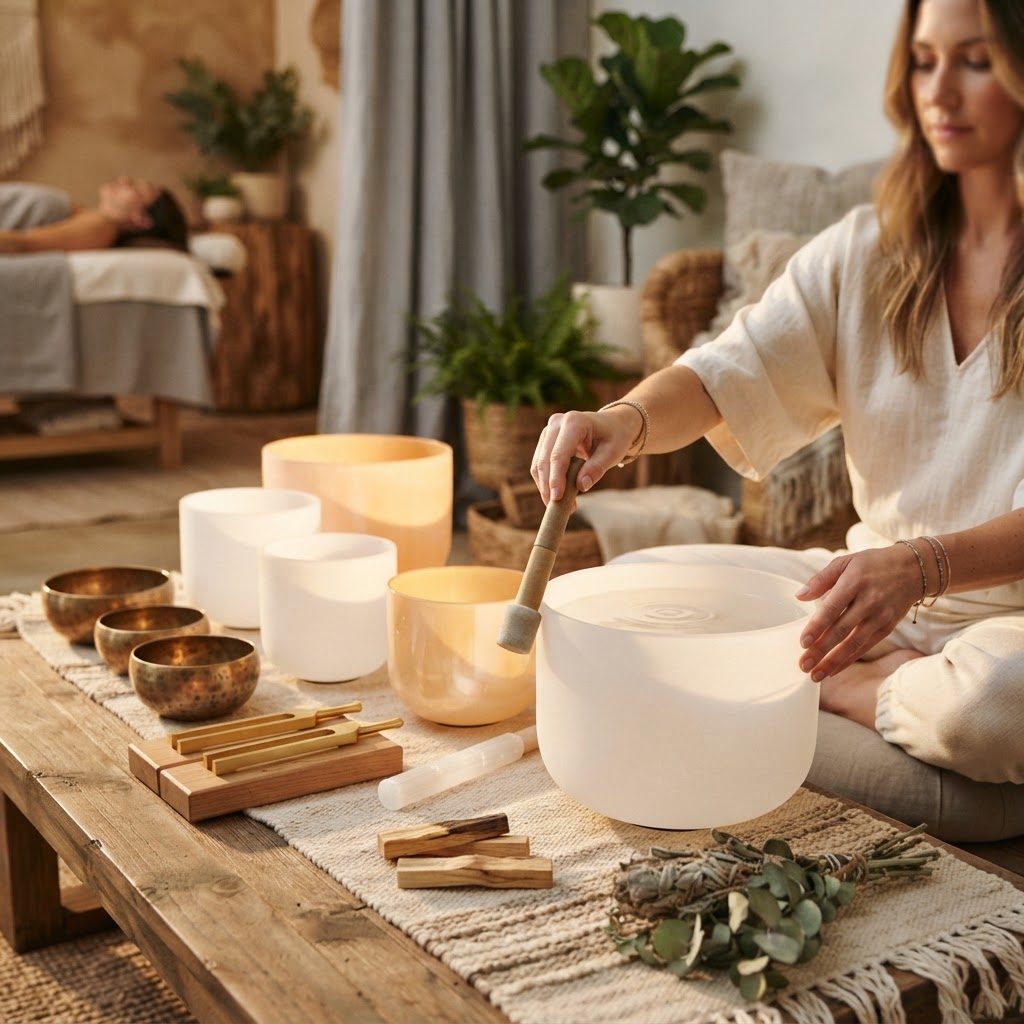
Sound healing has evolved from ancient ritual practice to one of the most scientifically validated healing modalities of 2026. With the global sound therapy market valued at $2.9 billion and projected to reach $5.4 billion by 2034, this is no longer a fringe wellness trend — it is a legitimate clinical practice with growing institutional adoption.
Whether you are a wellness practitioner looking to expand your skill set or someone curious about how sound can heal, this guide walks you through the science, the modalities, and the professional opportunities in sound healing today.
The Science: How Sound Healing Actually Works
Sound healing operates on a fundamental principle: everything in the human body vibrates at a specific frequency. When those frequencies become disrupted by stress, illness, or trauma, sound therapy can help restore them to their natural state.
Three primary mechanisms drive sound healing's clinical effectiveness:
**Brainwave Entrainment:** Specific frequencies guide the brain from beta (alert) into alpha, theta, and delta states — the same brainwave patterns associated with deep meditation, healing, and cellular repair.
**Vibroacoustic Therapy (VAT):** Low-frequency sound vibrations are delivered directly through the body using specialized equipment. Clinical studies in 2026 have shown VAT reduces chronic pain by up to 50% and significantly lowers anxiety scores in hospitalized patients.
**Nervous System Regulation:** Sound frequencies stimulate the parasympathetic nervous system, shifting the body from "fight or flight" into "rest and digest" mode — the physiological state where healing actually occurs.
A 2026 article in *Nature Biotechnology* highlighted how ultrasound neurotechnologies — a form of targeted sound therapy — are now advancing through clinical trials for movement disorders, psychiatric conditions, and pain management, signaling sound healing's transition into mainstream medical application.
The Core Sound Healing Modalities
Crystal Singing Bowls
Crystal bowls produce pure, sustained tones that resonate with specific chakras and energy centers. They are the most popular instruments in group sound bath settings. Certified practitioners use quartz crystal bowls tuned to specific frequencies (commonly 432 Hz or 528 Hz) to facilitate deep meditative states and energetic clearing.
Tibetan Singing Bowls
Traditional metal bowls produce complex harmonic overtones that create a rich, layered soundscape. Research shows Tibetan bowl therapy reduces tension, anger, fatigue, and depressed mood more effectively than silent meditation in controlled studies. They are particularly effective for anxiety reduction and emotional release.
Tuning Fork Therapy
Weighted tuning forks apply specific frequencies directly to the body at acupressure points, combining sound therapy with principles of traditional Chinese medicine. This modality is gaining traction in integrative medicine clinics for pain management and nervous system rebalancing.
Vibroacoustic Therapy (VAT)
VAT uses embedded transducers in mats or chairs to deliver low-frequency sound vibrations through the entire body. A 2026 scientific program on vibroacoustic therapy at the Traditional Medicine Conference highlighted VAT's role in autonomic regulation, pain reduction, and non-invasive support for trauma recovery. Hospitals and VA facilities are increasingly adopting VAT for patient care.
Vocal Toning and Mantra
The human voice is the most ancient and accessible sound healing tool. Vocal toning — sustained vowel sounds — and mantra chanting have been shown to stimulate the vagus nerve, reduce cortisol levels, and promote emotional release. This modality requires no equipment and can be practiced anywhere.
The Clinical Evidence in 2026
The research base for sound healing has grown dramatically:
Over 96 clinical trials have now validated biofield and sound therapy effectiveness across pain management, anxiety reduction, sleep improvement, and PTSD treatment.
VA hospitals are offering sound healing as part of standard trauma recovery programs for veterans.
Group sound bath sessions have moved from niche wellness events to mainstream offerings at art galleries, luxury fitness clubs, community mental health centers, and corporate wellness programs.
Sound therapy is being integrated into hospital pain management protocols, with documented reductions in opioid use among patients receiving vibroacoustic therapy.
The sound therapy market is growing at a CAGR of 7.6–8.6%, significantly faster than the overall wellness industry. This growth is driven by consumer demand for evidence-based, non-invasive therapies and by healthcare institutions seeking alternatives to pharmaceutical interventions.
The Professional Opportunity
For practitioners, sound healing represents one of the most accessible and scalable income opportunities in the healing arts:
**Group Sound Baths:** A single 60-minute group session can serve 10–50+ participants at $20–$60 per ticket, generating $200–$3,000 per event.
**1:1 Sessions:** Certified sound healers charge $70–$150 per individual session, with specialized vibroacoustic therapy commanding $120–$250.
**Corporate Wellness:** Companies are actively hiring certified sound healers for employee stress reduction programs, with rates of $500–$2,000 per corporate session.
**Retreat Integration:** Wellness retreats are adding sound healing as a signature experience, with certified practitioners earning $300–$600+ per session at luxury venues.
**Partnership Opportunities:** Yoga studios, luxury spas, psychology practices, and fitness clubs are all seeking certified sound healers to offer as value-added services.
The key differentiator is certification. In 2026's crowded wellness market, clients and institutions are no longer satisfied with hobbyists. They want practitioners who understand the science of brainwave entrainment, nervous system regulation, and safety protocols.
Getting Started with Sound Healing Certification
Professional sound healing certification programs typically cover:
The physics of sound and resonance
Instrument mastery (bowls, tuning forks, gongs, voice)
Clinical applications and safety protocols
Nervous system anatomy and vagus nerve stimulation
Business skills for building a sound healing practice
Most programs offer Level 1 (foundational practice) and Level 2 (practitioner diploma) certifications. After completing Level 1, you can begin offering sessions to friends, family, and community. Level 2 prepares you for professional practice with the clinical skills and business confidence to build a sustainable career.
The Bottom Line
Sound healing is at an unprecedented inflection point. The science is solid, the demand is surging, and the income opportunities for certified practitioners have never been greater. Whether you want to add sound healing to an existing practice or build an entirely new career, 2026 is the ideal time to invest in professional certification.
The question is not whether sound healing works — the research has answered that. The question is whether you will position yourself professionally to meet the growing demand.
**Ready to begin your healing arts certification journey? Join IHA as a free member today and take the first step toward a certified career in sound healing.**
👉 [Start your free IHA membership at healingof.org/free-member](https://www.healingof.org/free-member)
Comments